
Custom Printed Shrink Sleeves That Perform


What Can We Help You With?
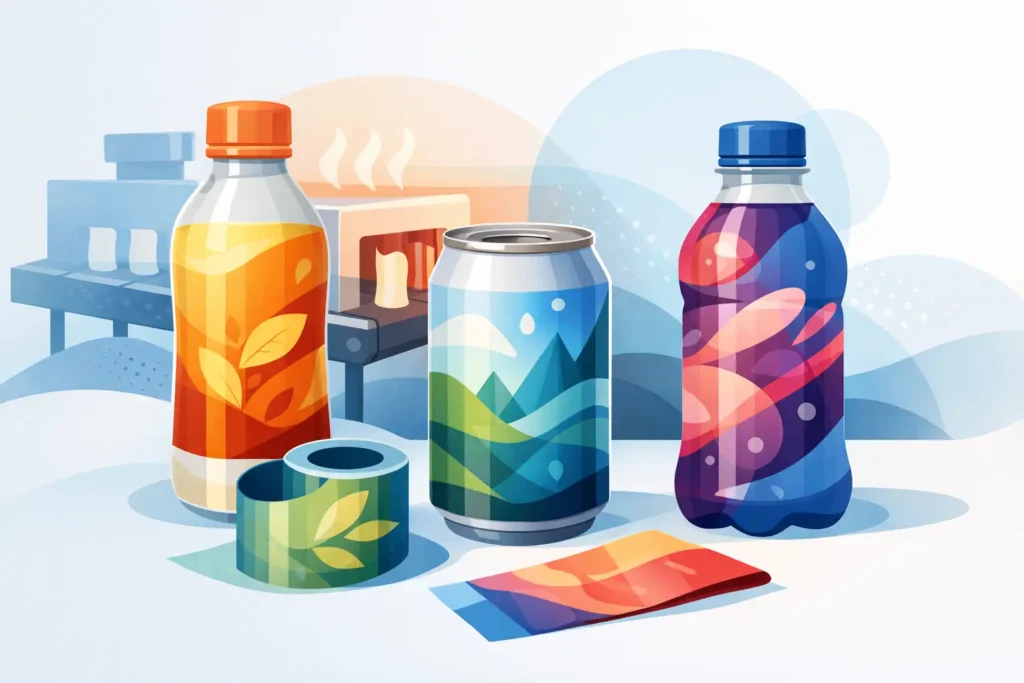
A bottle can look great in a brand meeting and still cause problems on the line. That usually happens when packaging decisions are made around appearance alone. Custom printed shrink sleeves solve more than one problem at once – they give brands full-container decoration, help products stand out, and accommodate unusual shapes that pressure-sensitive labels cannot handle as well.
For operations teams, procurement managers, and packaging buyers, the real question is not whether shrink sleeves look good. It is whether they will run consistently, apply cleanly, hold up in distribution, and align with the rest of the labeling and packaging workflow. That is where the right material, print method, and supplier support start to matter.
Why custom printed shrink sleeves are different
Shrink sleeves are not just another label format. They are a flexible film package decoration that conforms to the container when heat is applied. Because the sleeve can cover nearly the full surface, it gives much more design real estate than a standard label and works especially well on contoured containers, tamper-evident applications, and products that need strong shelf visibility.
That expanded coverage comes with trade-offs. A 360-degree sleeve creates more opportunities for bold graphics, instructions, regulatory content, and brand messaging. It also requires tighter planning around artwork distortion, seam placement, container tolerances, and shrink behavior. If any of those variables are missed, the result can be warped text, barcode issues, poor fit, or inconsistent appearance from one production run to the next.
For companies managing high-volume production or multiple SKUs, those details are not cosmetic. They affect throughput, rework, waste, and scan reliability.
Where shrink sleeves make the most sense
Custom-printed shrink sleeves are often the right fit when a product uses a complex or highly curved container, when shelf appeal is a major purchasing factor, or when a company wants to combine decoration and tamper evidence in a single format. Beverages, nutraceuticals, personal care products, household chemicals, cannabis, and specialty food products commonly benefit from this approach.
They are also useful when a package needs frequent design changes or versioning. A seasonal product, a limited-release item, or a private-label line may require flexible print runs without redesigning the container itself. In those cases, sleeves can support brand variation more efficiently than pre-printed containers.
That said, shrink sleeves are not automatically the best choice for every application. If the package is simple, the decoration area is small, and line speed or cost control is the top priority, another label format may be more practical. The best decision usually comes from balancing appearance, production demands, and total applied cost.
Material selection affects performance more than most buyers expect
When buyers compare shrink sleeves, they often start with graphics. Production teams usually start with film performance, and for good reason. The material determines how the sleeve shrinks, how it behaves under heat, and how well it fits the container’s contours.
Different films offer different shrink percentages, clarity, stiffness, and environmental characteristics. Some are better for aggressive contours. Others are better for high-speed applications or specific recycling goals. The wrong choice can create distortion around the shoulders, wrinkles near the base, or uneven results across a run.
Ink and coating choices matter too. A sleeve may look excellent off the press but perform poorly if the printed surface scuffs during handling or if the graphics do not hold up under the conditions of filling, packing, and transport. Barcode placement also needs careful attention. A barcode printed over a heavily distorted area may become difficult to scan, especially if the sleeve conforms tightly around curves.
This is where practical guidance helps. Buyers should not have to guess which combination of film, print treatment, and artwork setup will hold up on the actual container in the actual production environment.
Artwork, distortion, and barcode planning
One of the biggest differences between shrink sleeves and other label types is the need to account for distortion before printing. Because the sleeve changes shape as it shrinks onto the container, the artwork must be engineered to appear correct after application, not before.
That affects everything from logos and fine text to nutrition panels and UPC codes. A design that looks balanced in a flat file may not look balanced once it conforms to a tapered or curved package. The same goes for functional content. If variable data, lot coding, or machine-readable information needs to remain clear, those zones must be planned around low-distortion areas.
For regulated products, this is especially important. Compliance content must remain legible after the shrink application. If a package carries ingredient information, warnings, dosing instructions, or traceability data, the sleeve design needs to protect readability as much as brand presentation.
Production realities matter as much as packaging design
A sleeve program is only successful if it works on the line. Heat tunnel settings, container consistency, sleeve dimensions, and application equipment all influence the final result. Even a well-designed sleeve can underperform if the production setup is not aligned.
Steam tunnels, electric tunnels, and other heat-application methods each have strengths depending on the container material, film type, and line configuration. The right setup depends on multiple factors, including throughput requirements and the container’s sensitivity to heat. Lightweight containers, for example, may need more careful control to avoid deformation during the shrinking process.
Changeover is another consideration. If a facility runs multiple SKUs or package sizes, sleeve specifications should support repeatable setup and efficient transitions. Small inconsistencies in layflat dimensions, cut length, or seam quality can become larger issues when production speeds increase.
This is one reason businesses often benefit from working with a partner that understands the full identification and packaging process, not just the printed component. Shrink sleeves do not operate in isolation from the rest of the workflow.
How to evaluate a shrink sleeve supplier
A dependable supplier should do more than quote a per-unit price. They should be able to discuss the application, container geometry, artwork requirements, production conditions, and downstream scanning or compliance needs. That consultative approach reduces risk early, before problems show up in production or on store shelves.
It also helps to evaluate whether the supplier can support broader packaging and labeling requirements. Many organizations are trying to standardize vendors and reduce the friction of managing separate sources for labels, printers, ribbons, barcode systems, and packaging materials. When those elements are treated as connected parts of a single system, implementation tends to be smoother and troubleshooting faster.
For companies with operational complexity, that matters. A packaging decision can simultaneously affect warehouse identification, barcode verification, inventory handling, and customer-facing presentation. PaladinID works with organizations that need application-focused support, especially when product identification and production reliability must move in tandem.
Common mistakes with custom printed shrink sleeves
The most common problems are usually avoidable. One is treating shrink sleeves as a design-only purchase and involving operations too late. Another is choosing a film based on cost without confirming fit and shrink performance on the actual container.
A third is underestimating the effect of distortion on barcodes and regulated text. Teams often assume those elements can be placed wherever space is available. In reality, placement should be intentional and validated. Finally, some buyers skip application testing or do too little of it. A sleeve may perform differently at production speed than it does in a sample review.
The better approach is to validate early, test under realistic conditions, and ensure marketing, packaging, and operations are aligned before the full rollout.
A better way to approach shrink sleeve projects
The strongest shrink sleeve programs usually start with a clear operational definition of success. That includes visual expectations, line performance, container compatibility, barcode readability, durability, and cost targets. Once those are defined, material and print decisions become easier to evaluate.
This process does not need to be complicated, but it does need to be grounded in how the product will actually move through filling, packing, shipping, and use. A sleeve that looks right but slows production is a problem. A sleeve that runs well but compromises branding can also miss the mark. The goal is a package that performs across both marketing and operations.
Custom-printed shrink sleeves can be a strong choice for brands that need full-container decoration and for organizations that need packaging to do more than just look finished. When selected and implemented well, they support shelf presence, protect key information, and fit into a more reliable production workflow.
The smartest packaging decisions usually come from asking a simple question early: will this work as well on the line as it does in the concept review?
At PaladinID, we understand that every labeling application is different.
That’s why companies across the country trust us to help them identify the right solution for their business. With over 40 years of experience and one of the industry’s largest selections of labeling products, we make it easy to find the right fit for your operation. Whether you need stock products or a custom-built solution, our team is ready to help. Visit our online catalog, Email us, or call us today at 888.972.5234.
PaladinID delivers label solutions that stick!


Got Labeling Questions? Our AI Assistant Has Answers - Chat Now!
For more information on PaladinID
Get Help With Your Next Label Project
We have over 35 years of providing exceptional service and labeling products to the world. Take the first step to an easy, stress-free solution for your label needs by contacting us.
Schedule a call below or email dritchie@paladinid.com
Make Your Mark
“Making companies more competitive by offering the correct label printing solution, on time, within budget, while creating unmatched value”.
About PaladinID, LLC
PaladinID develops and supports high-performance barcode labeling applications. We work with our clients to “Make Your Mark” by providing the expertise and tools necessary to create an entire product label printing solution. Located in central New Hampshire, PaladinID has been serving Massachusetts, Vermont, Maine, Connecticut, Rhode Island, New England, and beyond for over 30 years, and in 2017, became an RFID-certified company. We look forward to working with you.
You may be interested in our other services:
Product Labels
Product Labels
Labels for every type of application: Blank, Pre-printed, Variable data
Label Printers
Label Printers
We sell and support: Direct/thermal transfer, Inkjet, Laser
Printer Ribbons
Printer Ribbons
We sell ribbons for ALL barcode printers including: Zebra, Datamax, Sato, Intermec
Flexible Packaging
Flexible Packaging
We offer a wide variety of packaging containers for your products.
Label Software
Label Software
Software for all barcode printing and product labeling.
Label applicators
Label Applicators
Wide selection of applicators: Desktop/Mobile, Applicator only, Print & apply
