
When to Replace the Printhead on Your Label Printers




What Can We Help You With?
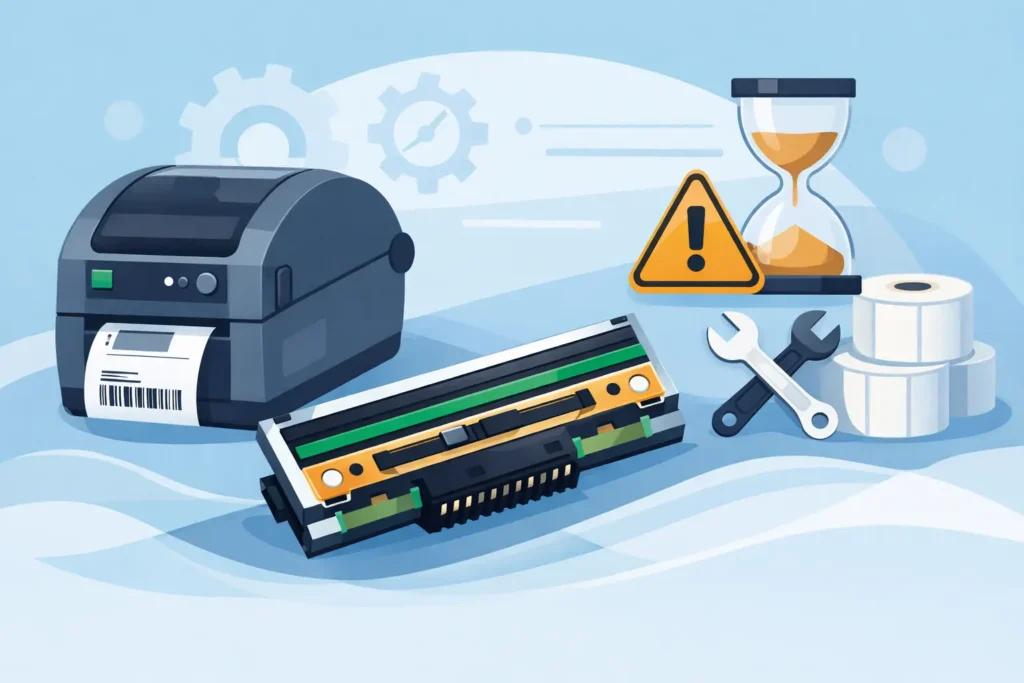
A label printer rarely fails all at once. More often, output quality starts drifting first – a barcode that will not scan consistently, faint sections across the label, or text that looks broken even after a media change. If you are asking when to replace the printhead, the right answer is usually earlier than when production stops.
For operations teams, that timing matters. A worn printhead does more than create ugly labels. It can disrupt receiving, shipping, inventory accuracy, compliance with labeling requirements, and traceability. In industrial environments where every label has a job to do, print quality is an operational issue, not just a maintenance detail.
When to replace the printhead before quality problems spread
The printhead is the component that transfers heat to the ribbon or direct thermal media. Over time, friction, heat, label adhesive, dust, and handling wear down the print line. That wear is expected. The challenge is recognizing when normal aging becomes a risk to barcode readability and process consistency.
A good rule is this: replace the printhead when cleaning and setup adjustments no longer restore consistent print quality. If defects return quickly after cleaning, or if the same missing lines appear in the same positions from label to label, the printhead is usually the cause.
That does not mean every print defect points straight to replacement. Ribbon mismatch, incorrect darkness settings, pressure imbalance, dirty rollers, or poor media can create similar symptoms. The decision should come from pattern recognition, not guesswork.
Visit our online catalog of replacement printheads.
The clearest signs your printhead is wearing out
The most common sign is persistent white lines running vertically through text, barcodes, or graphics. Those lines usually indicate burned-out heating elements in the printhead. If the line appears in the same place on every label, across different media and ribbon combinations, that is a strong signal that the printhead surface has failed in that area.
Another warning sign is fading that does not improve with normal maintenance. If operators increase darkness to compensate and print quality still looks uneven, the printhead may no longer be heating consistently. This often shows up as faint barcodes, incomplete characters, or variable contrast across the label’s width.
You may also see increased barcode scan failures before the problem becomes obvious to the eye. Warehouses and production lines often first detect printhead wear through operational feedback. Scanners begin rejecting labels more often, operators reprint jobs, and exceptions start piling up. By the time the label visibly looks bad, the printhead may already be costing time and money.
Physical damage is another clear trigger. Scratches from improper cleaning tools, labels run with exposed liner wrinkles, adhesive buildup baked onto the print line, or impact during handling can permanently damage the printhead. Once the print surface is scored or chipped, replacement is typically the right move.
Why waiting too long costs more than the part
Some teams try to extend printhead life until failure is undeniable. On paper, that can look like cost control. In practice, it often creates more expensive problems.
Poor print quality can lead to unreadable shipping labels, misidentified inventory, rejected compliance labels, and manual workarounds on the floor. If operators are stopping to clean the printer multiple times per shift, reprinting batches, or constantly adjusting settings, the labor cost starts to outweigh the value of squeezing a little more life from the part.
There is also the risk of masking one problem with another. When a printhead begins to wear out, users often turn up the heat or slow the print speed to force acceptable output. Sometimes that works for a short period. But it can also increase ribbon consumption, stress media performance, and create inconsistent results across printers in the same operation.
For facilities that depend on barcode compliance or traceability, the better approach is controlled replacement rather than reactive replacement. Scheduled maintenance is easier to manage than a failed printhead during a shipping window.
When to replace the printhead versus when to troubleshoot
If print quality drops suddenly, troubleshoot first. A dirty printhead can look like a damaged one, especially in dusty warehouses or production environments where adhesives and coatings build up quickly. Cleaning the printhead with approved materials, checking media alignment, confirming ribbon compatibility, and inspecting the platen roller should happen before ordering parts.
Settings matter too. Darkness and speed that were fine for one label stock may not be right for another. A printhead that seems weak may actually be running outside the best setup for the media.
Still, there is a line between troubleshooting and delaying. If the printer has been cleaned properly, the media and ribbon are matched correctly, the pressure settings are balanced, and the defect remains fixed in place on every label, then replacement is usually justified. The key is repeatability. Random defects suggest process or supply issues. Repeating defects in the same location point to the printhead.
How the print environment affects printhead life
Not every printer wears out at the same rate. A desktop printer used lightly for office labeling will age differently than an industrial printer running long shifts in a warehouse, plant, nursery, or outdoor staging area.
Harsh environments shorten printhead life. Dust, abrasion, chemical exposure, heat, and aggressive label materials all increase wear. So does poor media quality. Labels with rough surfaces, exposed adhesive at the edges, or low-grade liners can create friction and contamination that damage the print line faster.
Operator habits matter as well. Using the wrong cleaning tools, touching the print line with bare fingers, loading media incorrectly, or running the printer with wrinkles or debris in the path can significantly shorten printhead life. That is why replacement planning should not happen in isolation. It should be tied to media selection, printer settings, cleaning intervals, and user training.
A practical way to decide when to replace the printhead
For most businesses, the best decision framework is not based on age alone. It is based on performance. Replace the printhead when print quality becomes unreliable, barcode performance drops, and maintenance no longer restores stable output.
A few questions can help confirm the call. Are defects repeating in the same exact position? Have you already cleaned the printer and verified supplies? Are operators compensating by reprinting, slowing jobs, or changing settings too often? Are scanners rejecting labels more frequently? If the answer to several of those is yes, replacement is usually the more efficient path.
It is also smart to consider the application. If you are printing internal shelf labels, a minor defect may be manageable for a short time. If you are printing product identification, healthcare labels, regulated information, or shipping labels tied to customer requirements, the tolerance for degradation is much lower. In those cases, waiting can create downstream errors that are harder to recover from than the hardware swap itself.
Preventing premature replacement
Replacing a printhead at the right time matters, but so does avoiding replacement too soon. Preventive care extends life and improves consistency.
Clean the printhead at recommended intervals, especially during ribbon and media changes. Use approved cleaning supplies, not improvised tools. Match ribbon and label materials to the printer and application. Check platen rollers for wear, as a damaged roller can cause pressure issues that may appear to be printhead failure. Monitor darkness and speed settings rather than letting operators keep increasing heat to compensate for weak output.
For organizations with multiple printers, standardization helps. Using the same approved supplies, maintenance routines, and setup profiles across sites makes it easier to spot true hardware wear instead of chasing avoidable variation.
If your operation depends on high-volume or high-consequence labeling, keeping a replacement printhead on hand is often justified. It reduces downtime and lets maintenance teams swap the part before label quality begins affecting shipments or production.
Support matters as much as the part
Choosing when to replace the printhead is not just about spotting defects. It is about protecting the reliability of the full labeling system. The right replacement part, matched to the printer model, media, ribbon, and application, will always outperform a guess made under pressure.
That is where a support partner can make a difference. Companies like PaladinID work with businesses that need more than a box of parts – they need help diagnosing recurring print issues, selecting compatible supplies, and keeping labeling workflows dependable across real operating conditions. Check out our printhead warranty program.
If your printer is constantly asking for adjustments just to produce acceptable labels, it is probably telling you something. Replacing the printhead at the right moment is not an extra expense. It is a way to keep the rest of your operation moving without unnecessary friction.
At PaladinID, we understand that every labeling application is different.
That’s why companies across the country trust us to help them identify the right solution for their business. With over 40 years of experience and one of the industry’s largest selections of labeling products, we make it easy to find the right fit for your operation. Whether you need stock products or a custom-built solution, our team is ready to help. Visit our online catalog, Email us, or call us today at 888.972.5234.
PaladinID delivers label solutions that stick!


Got Labeling Questions? Our AI Assistant Has Answers - Chat Now!
For more information on PaladinID
Get Help With Your Next Label Project
We have over 35 years of providing exceptional service and labeling products to the world. Take the first step to an easy, stress-free solution for your label needs by contacting us.
Schedule a call below or email dritchie@paladinid.com
Make Your Mark
“Making companies more competitive by offering the correct label printing solution, on time, within budget, while creating unmatched value”.
About PaladinID, LLC
PaladinID develops and supports high-performance barcode labeling applications. We work with our clients to “Make Your Mark” by providing the expertise and tools necessary to create an entire product label printing solution. Located in central New Hampshire, PaladinID has been serving Massachusetts, Vermont, Maine, Connecticut, Rhode Island, New England, and beyond for over 30 years, and in 2017, became an RFID-certified company. We look forward to working with you.
You may be interested in our other services:
Product Labels
Product Labels
Labels for every type of application: Blank, Pre-printed, Variable data
Label Printers
Label Printers
We sell and support: Direct/thermal transfer, Inkjet, Laser
Printer Ribbons
Printer Ribbons
We sell ribbons for ALL barcode printers including: Zebra, Datamax, Sato, Intermec
Flexible Packaging
Flexible Packaging
We offer a wide variety of packaging containers for your products.
Label Software
Label Software
Software for all barcode printing and product labeling.
Label applicators
Label Applicators
Wide selection of applicators: Desktop/Mobile, Applicator only, Print & apply
