
Manufacturing Labeling Systems That Are Robust




What Can We Help You With?
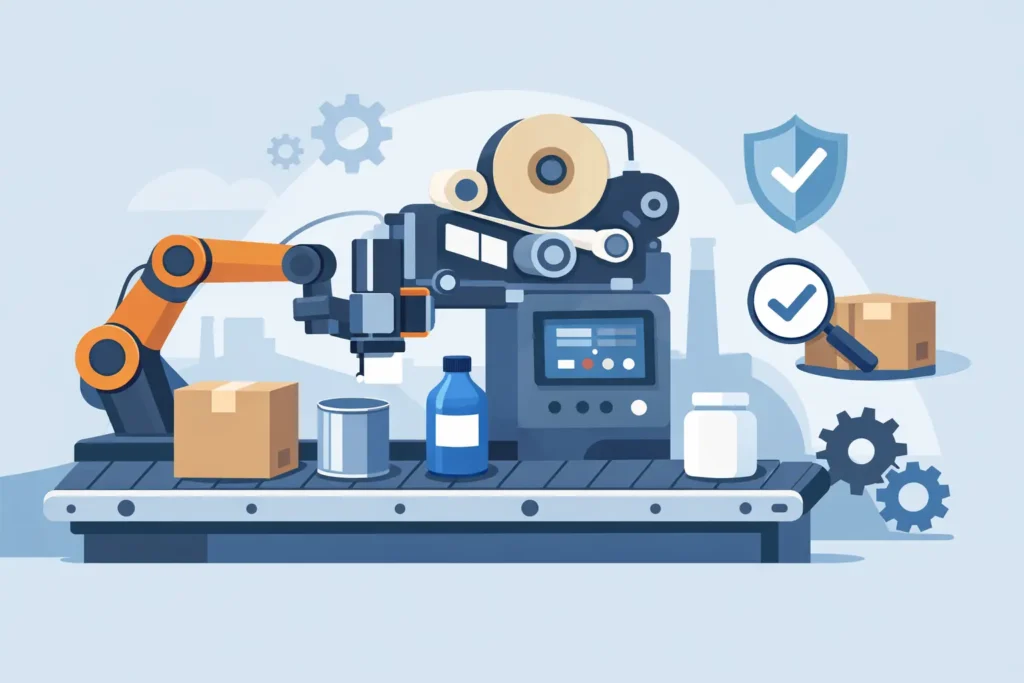
What manufacturing labeling systems actually include
A reliable labeling system is not one product. It is a connected setup that includes labels and tag materials, printers, ribbons where thermal transfer printing is used, printheads and replacement parts, label design software, data integration, and the process rules that determine what gets printed and when. That broader view matters because many labeling problems are not caused by the printer alone. A warehouse team may blame hardware when the real issue is an adhesive that cannot handle cold storage. A production manager may see barcode failures that are really tied to ribbon and label mismatch. An IT stakeholder may be asked to fix duplicate data when the root problem is a manual labeling workflow that should have been tied to an ERP, WMS, or manufacturing system in the first place. The strongest systems are designed around the application. That means understanding surface type, environmental exposure, scan distance, data source, print volume, compliance requirements, and who is responsible for label creation on the floor.Why manufacturing labeling systems fail in real operations
Most failures start with a disconnect between the label setup and the environment where it has to perform. Office-grade assumptions rarely survive a plant floor. Heat, abrasion, moisture, chemicals, UV exposure, freezer conditions, rough handling, and fast-moving inventory all affect label performance. The same is true for print quality. A barcode that looks acceptable to the eye may still fail under a scanner if darkness, resolution, ribbon selection, or media calibration is off. That becomes a larger problem when labels move between departments or facilities using different scanners, software settings, or handling standards. There is also a workflow issue. If operators have to key in product data manually, print from multiple disconnected systems, or choose from too many label formats, mistakes become predictable. Standardization helps, but only when the system is practical enough for teams to follow under production pressure.The core decisions that shape system performance
Printer selection matters, but it should come after the application is clear. Desktop units may be fine for lower-volume stations, while industrial printers are better suited for high-duty-cycle manufacturing and warehouse use. Mobile printing can make sense for asset tagging, work-in-process labeling, or point-of-application tasks, but only if wireless connectivity and media durability are dependable. Media choice is just as critical. Paper labels may work well for short-life applications, carton labeling, or controlled indoor use. Synthetic materials are often the better fit when labels face chemicals, abrasion, moisture, or prolonged handling. Adhesive selection also changes the outcome. The right facestock with the wrong adhesive is still the wrong label. Thermal transfer versus direct thermal is another important choice. Direct thermal can be efficient for short-term labeling, especially in shipping and logistics. Thermal transfer is usually the better option when durability, longer label life, or resistance to fading matters. The trade-off is that thermal transfer adds ribbon management, but in many manufacturing environments, the added durability is worth it. Software should not be an afterthought. Label design tools need to support controlled templates, variable data, barcode standards, and user permissions. For larger operations, integration with business systems can reduce manual input and improve consistency. If the software is too limited, teams create workarounds. If it is too complex, adoption suffers. The right fit depends on scale, data complexity, and how many locations or users are involved.Where manufacturers see the biggest gains
Traceability is usually the first major gain. When raw materials, components, and finished goods are labeled consistently, teams can follow product movement with less guesswork. That supports inventory accuracy, lot control, quality investigation, and customer requirements for product history. Production efficiency improves as well. Clear, scannable labels reduce relabeling and help operators move material through work centers faster. In many facilities, the labor cost of correcting bad labels quietly exceeds the cost of improving the system that produced them. Shipping accuracy is another area where the value becomes obvious. Labels that print correctly the first time and scan consistently at pack-out, staging, and receiving reduce disputes and delays. When outbound labeling is tied to order and inventory data, there is less reliance on manual checks. Compliance can also become easier to manage. Manufacturers dealing with industry-specific requirements, customer label mandates, hazardous communication, or serialized tracking need controlled output. A labeling system helps when it enforces the right format and pulls approved data from the correct source.Common use cases inside the plant
Manufacturing labeling systems often start with one application and then expand. A company may begin with product labels on finished goods and then move into pallet identification, bin labels, rack labels, work-in-process tracking, asset tags, and shipping labels. That expansion is where planning pays off. If each department buys hardware and materials independently, the business ends up with unnecessary variation. Different printer brands, inconsistent label sizes, duplicate templates, and incompatible supplies make support harder and purchasing less efficient. A more effective approach is to standardize where it makes sense and allow exceptions only when the application truly requires them. A harsh-environment label for outdoor storage should not be selected the same way as a short-life carton label. But both should still fit into a system that is manageable, documented, and supported.How to evaluate a system before rollout
The best evaluations are done in the real environment, not just from a spec sheet. A label should be tested on the actual surface, under the actual temperature and handling conditions, and with the scanners used in the field. Print quality should be reviewed after application, after transport, and after the expected lifespan of the label. It also helps to map the workflow around the label. Where is the data coming from? Who triggers printing? What happens if a printer goes down? How are templates controlled? How are supplies replenished? These questions often reveal risks that are easy to miss when teams focus only on device features. Support matters here. Many organizations can buy a printer online. Fewer have a partner who can help align supplies, hardware, software, replacement parts, and application guidance into one dependable process. That gap becomes more obvious over time, especially when operations scale, requirements change, or uptime becomes critical.Building for reliability, not just initial cost
Low upfront pricing can be expensive if it creates recurring failures. A cheaper label that needs replacement, a ribbon that produces poor scan quality, or a printer that is not built for industrial duty can all drive hidden costs in labor, downtime, and customer impact. That does not mean every application needs the most expensive setup. It means the system should match the business need. Some operations need high-durability materials and integrated software controls. Others need a simpler setup with dependable consumables and clear support. The right answer depends on environment, volume, compliance, and the cost of failure. For manufacturers, that is the real standard. A labeling system should not just print. It should hold up under production conditions, support traceability, and make daily work easier for the teams who depend on it. When labels, printers, software, and support are aligned with the application, the system becomes part of operational control rather than another source of exceptions. If your current setup depends on workarounds, frequent relabeling, or operator memory, that is usually a sign that the system needs more than a supply refill. It needs a better fit for the job.At PaladinID, we understand that every labeling application is different.
That’s why companies across the country trust us to help them identify the right solution for their business. With over 40 years of experience and one of the industry’s largest selections of labeling products, we make it easy to find the right fit for your operation. Whether you need stock products or a custom-built solution, our team is ready to help. Visit our online catalog, Email us, or call us today at 888.972.5234. PaladinID delivers label solutions that stick!

Got Labeling Questions? Our AI Assistant Has Answers - Chat Now!
For more information on PaladinID
Get Help With Your Next Label Project
We have over 35 years of providing exceptional service and labeling products to the world. Take the first step to an easy, stress-free solution for your label needs by contacting us.
Schedule a call below or email dritchie@paladinid.com
Make Your Mark
“Making companies more competitive by offering the correct label printing solution, on time, within budget, while creating unmatched value”.
About PaladinID, LLC
PaladinID develops and supports high-performance barcode labeling applications. We work with our clients to “Make Your Mark” by providing the expertise and tools necessary to create an entire product label printing solution. Located in central New Hampshire, PaladinID has been serving Massachusetts, Vermont, Maine, Connecticut, Rhode Island, New England, and beyond for over 30 years, and in 2017, became an RFID-certified company. We look forward to working with you.
You may be interested in our other services:
Product Labels
Product Labels
Labels for every type of application: Blank, Pre-printed, Variable data
Label Printers
Label Printers
We sell and support: Direct/thermal transfer, Inkjet, Laser
Printer Ribbons
Printer Ribbons
We sell ribbons for ALL barcode printers including: Zebra, Datamax, Sato, Intermec
Flexible Packaging
Flexible Packaging
We offer a wide variety of packaging containers for your products.
Label Software
Label Software
Software for all barcode printing and product labeling.
Label applicators
Label Applicators
Wide selection of applicators: Desktop/Mobile, Applicator only, Print & apply
