
Barcode Labeling for Warehouses That Works




What Can We Help You With?
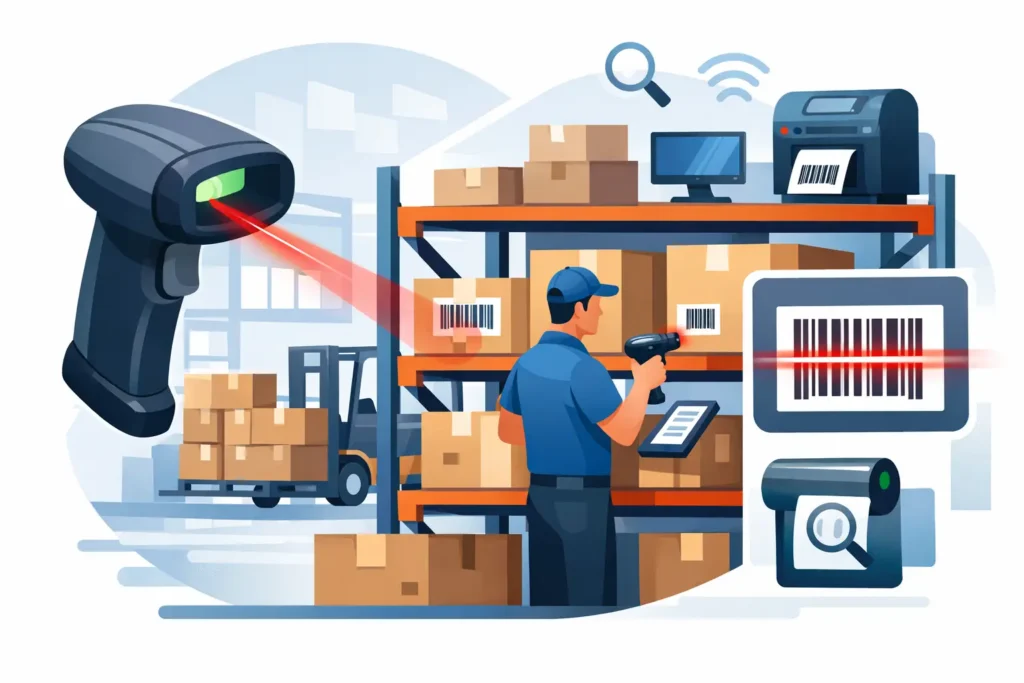
A barcode that will not scan at receiving can slow down an entire shift. One bad label on a rack location can send a picker to the wrong aisle, trigger inventory discrepancies, and create avoidable rework. That is why barcode labeling for warehouses is not just a printing task. It is an operational system that affects accuracy, labor efficiency, and the reliability of every downstream process.
Warehouse teams usually feel labeling problems long before they formally diagnose them. Pickers start keying data manually because labels are faded. Forklift operators avoid scanning certain locations because symbols are damaged or placed inconsistently. Shipping teams reprint labels at the dock because formats do not match carrier or WMS requirements. These are not isolated irritations. They are signs that the labeling system was built around convenience instead of warehouse conditions.
What barcode labeling for warehouses actually includes
When people talk about warehouse barcodes, they often mean product labels or shipping labels. In practice, the system is broader. A working warehouse labeling program includes rack and bin labels, pallet labels, carton labels, product identification, work-in-process labels, shipping labels, asset tags, and sometimes RFID-enabled identification for specific use cases.
Each label type serves a different purpose, which means it may need a different material, adhesive, print method, and format. A rack label mounted high in an aisle faces different risks than a pallet label applied to stretch wrap. A freezer location label has different durability demands than a temporary cross-dock label. The mistake many operations make is trying to standardize too aggressively with one label stock, one printer setup, and one format for everything.
A better approach is to standardize where it helps and specialize where conditions require it. That keeps training simpler without forcing labels into environments they were never designed to handle.
Why warehouse barcode failures happen
Most scanning issues are not caused by the barcode symbology itself. They come from a mismatch between the label and the application. The barcode may be technically correct, but if the ribbon, printhead settings, material, surface, and environmental exposure are wrong, the scan result will still be poor.
Warehouse conditions are harder on labels than many buyers expect. Dust, abrasion, UV exposure, moisture, condensation, temperature swings, and frequent handling all degrade print quality over time. Add forklift traffic and rough pallet movement, and even well-printed labels can fail if the facestock or adhesive is not suited to the job.
Placement is another common issue. A perfectly printed barcode is still ineffective if it is wrapped over an edge, hidden by shrink film glare, mounted too high for scanners, or positioned where product movement routinely damages it. This is why warehouse labeling decisions should be made on the floor, not only at a desk.
Designing barcode labeling for warehouses around workflow
The strongest warehouse labeling systems start with process mapping. Before selecting materials or printers, it helps to identify where labels are created, who scans them, what devices are used, how often they are handled, and what conditions they face over their lifespan.
Receiving, putaway, replenishment, picking, packing, and shipping all place different demands on barcode performance. If your receiving team prints pallet labels on demand, speed and variable data integration matter as much as print durability. If your location labels are expected to remain in place for years, adhesive performance and resistance to abrasion become more important than print speed.
This is also where format decisions matter. Larger barcodes may improve scan reliability from a distance, but they take up more space and may not fit smaller containers. Dense data formats can support traceability, but they are less forgiving if print quality drops. Linear barcodes are often sufficient for many warehouse applications, while 2D codes make more sense when space is limited or more data needs to be encoded. The right choice depends on the task, not on what happens to be familiar.
Labels, printers, ribbons, and software have to work together
A warehouse barcode program is only as reliable as its weakest component. Operations teams sometimes buy printers from one source, labels from another, ribbons from a third, and software with little validation across the full setup. That can work, but it often creates preventable problems – inconsistent print quality, adhesive failures, scanner readability issues, and support gaps when something goes wrong.
Thermal transfer printing is often the better fit for warehouse environments because it offers stronger durability than direct thermal for many long-life applications. But that does not mean every warehouse label should use the same ribbon or material. A wax ribbon may be acceptable for short-term carton labels, while resin or wax-resin combinations may be a better match for labels exposed to friction, chemicals, or outdoor conditions.
Printer selection matters too. Desktop units may be fine for low-volume workstations, but industrial printers are usually the right choice for sustained warehouse output, wider media options, and harsher operating conditions. Print resolution, media handling, connectivity, and compatibility with your WMS or ERP all affect how well the system performs after installation.
Software is where many labeling systems either become scalable or stay manual. If teams are typing the same product or shipment data repeatedly, the process is vulnerable to errors and labor waste. Labeling software that connects with business systems can automate variable data, enforce format consistency, and make it easier to control changes across multiple facilities.
Barcode labeling for warehouses and inventory accuracy
Inventory accuracy depends on scan behavior people can trust. If warehouse staff expect barcodes to fail, they start working around the system. They may skip scans, write notes by hand, or enter identifiers manually. Once that becomes normal, data quality drops quickly.
Reliable barcode labeling for warehouses helps restore discipline because it reduces friction at the point of use. When labels scan quickly and consistently, employees follow the process with less resistance. That improves cycle counting, location verification, replenishment accuracy, and shipping validation.
There is also a management benefit. Better scan reliability creates cleaner data, and cleaner data makes it easier to diagnose actual inventory issues instead of spending time chasing errors caused by bad labels. For operations leaders, that difference matters. You can solve process problems faster when your identification layer is dependable.
Where standardization helps and where it does not
Warehouse leaders often want a single labeling standard across buildings, shifts, and workflows. That is usually the right instinct, but there are limits. Standardizing barcode size, data structure, naming conventions, and software logic can improve control and training. Standardizing every material and print setup across all use cases can create failures.
For example, using the same label stock for indoor rack locations and outdoor overflow storage may save purchasing complexity, but it may also shorten label life and increase replacement labor. On the other hand, allowing every department to create its own label format usually leads to confusion and scanner inconsistency.
The most effective programs separate what must be consistent from what should remain application-specific. Data standards should be centralized. Material and adhesive choices should be driven by the environment.
What to evaluate before you buy
If you are reviewing a warehouse labeling program, start with failure points rather than catalog categories. Look at where labels are being replaced most often, where scans are slow, where manual entry still happens, and where environmental conditions are causing damage.
Then evaluate the full system: label construction, adhesive, ribbon, printer type, software integration, scan distance, mounting method, and replacement process. A cheaper label is rarely cheaper if it has to be replaced early or causes labor delays. Likewise, a high-end printer will not solve readability problems caused by poor material selection or inconsistent label design.
This is where an experienced partner can make a measurable difference. Companies like PaladinID work with customers to match materials, printing methods, software, and operational requirements so the system performs in the real warehouse, not just in a product specification sheet.
Support matters after rollout
Implementation is not the finish line. Warehouses change. Slotting changes. Software changes. New product lines, new compliance requirements, and new facilities all put pressure on the labeling system. If the original setup was not designed to adapt, the operation gradually falls back into exceptions and workarounds.
Ongoing support helps keep standards intact while adjusting for new realities. That may include replacing worn printheads, changing ribbon formulations, updating templates, expanding printer capacity, or introducing new label constructions for different environments. The goal is not to keep buying more components. It is to keep the identification system aligned with the way the warehouse actually operates.
Good barcode labeling is easy to overlook when it works, and expensive to ignore when it does not. If your warehouse is fighting scan failures, reprints, or inconsistent inventory data, the fix may not be a faster scanner or another software patch. It may be time to build a labeling system that was designed for the floor you run every day.
At PaladinID, we understand that every labeling application is different.
That’s why companies across the country trust us to help them identify the right solution for their business. With over 40 years of experience and one of the industry’s largest selections of labeling products, we make it easy to find the right fit for your operation. Whether you need stock products or a custom-built solution, our team is ready to help. Visit our online catalog, Email us, or call us today at 888.972.5234.
PaladinID delivers label solutions that stick!


Got Labeling Questions? Our AI Assistant Has Answers - Chat Now!
For more information on PaladinID
Get Help With Your Next Label Project
We have over 35 years of providing exceptional service and labeling products to the world. Take the first step to an easy, stress-free solution for your label needs by contacting us.
Schedule a call below or email dritchie@paladinid.com
Make Your Mark
“Making companies more competitive by offering the correct label printing solution, on time, within budget, while creating unmatched value”.
About PaladinID, LLC
PaladinID develops and supports high-performance barcode labeling applications. We work with our clients to “Make Your Mark” by providing the expertise and tools necessary to create an entire product label printing solution. Located in central New Hampshire, PaladinID has been serving Massachusetts, Vermont, Maine, Connecticut, Rhode Island, New England, and beyond for over 30 years, and in 2017, became an RFID-certified company. We look forward to working with you.
You may be interested in our other services:
Product Labels
Product Labels
Labels for every type of application: Blank, Pre-printed, Variable data
Label Printers
Label Printers
We sell and support: Direct/thermal transfer, Inkjet, Laser
Printer Ribbons
Printer Ribbons
We sell ribbons for ALL barcode printers including: Zebra, Datamax, Sato, Intermec
Flexible Packaging
Flexible Packaging
We offer a wide variety of packaging containers for your products.
Label Software
Label Software
Software for all barcode printing and product labeling.
Label applicators
Label Applicators
Wide selection of applicators: Desktop/Mobile, Applicator only, Print & apply
